Yaqoob Ahmad
Co-founder & Facilitator
Design, facilitation, and helping participants turn ideas into finished work.
LinkedInA funded week in London for people who make things happen. Take on a real problem from an AI safety organisation, ship something useful, and leave with work to show and people who’ll vouch for you.
Five focused days to build
In person, at LISA
Small by design
Travel, stay and food covered
Generalist pipeline
From understanding the field to doing the work. See how these programmes connect, and where Gen Stream turns momentum into a next step.
Programmes select independently. Progression depends on fit and available opportunities.
Gen Stream · One focused week
Spend a funded week in London building a real AI safety project. We focus on what follows: work you can show, mentors who can speak to your ability, and introductions that help you move towards a role.
Register interest in Gen StreamWe help every participant turn their work into a concrete next step.
Help accessing expedited career-transition grants, plus warm referrals to Generator Residency for suitable candidates.
References from your project mentor and Gen Stream mentors, and referrals to other roles where your skills fit.
Contractor work or roles arising from your projects, and an alumni pool we turn to when organisations ask us for strong candidates.
The week
Space to focus. People to challenge you. A rhythm designed to turn good intentions into work you can point to.
Monday
Meet your people, find your bearings at LISA, and cut your project down to something you can actually finish. Pitch your scope to the room, then get to work.
What you’ll have
Cohort 01
24–28 August 2026London
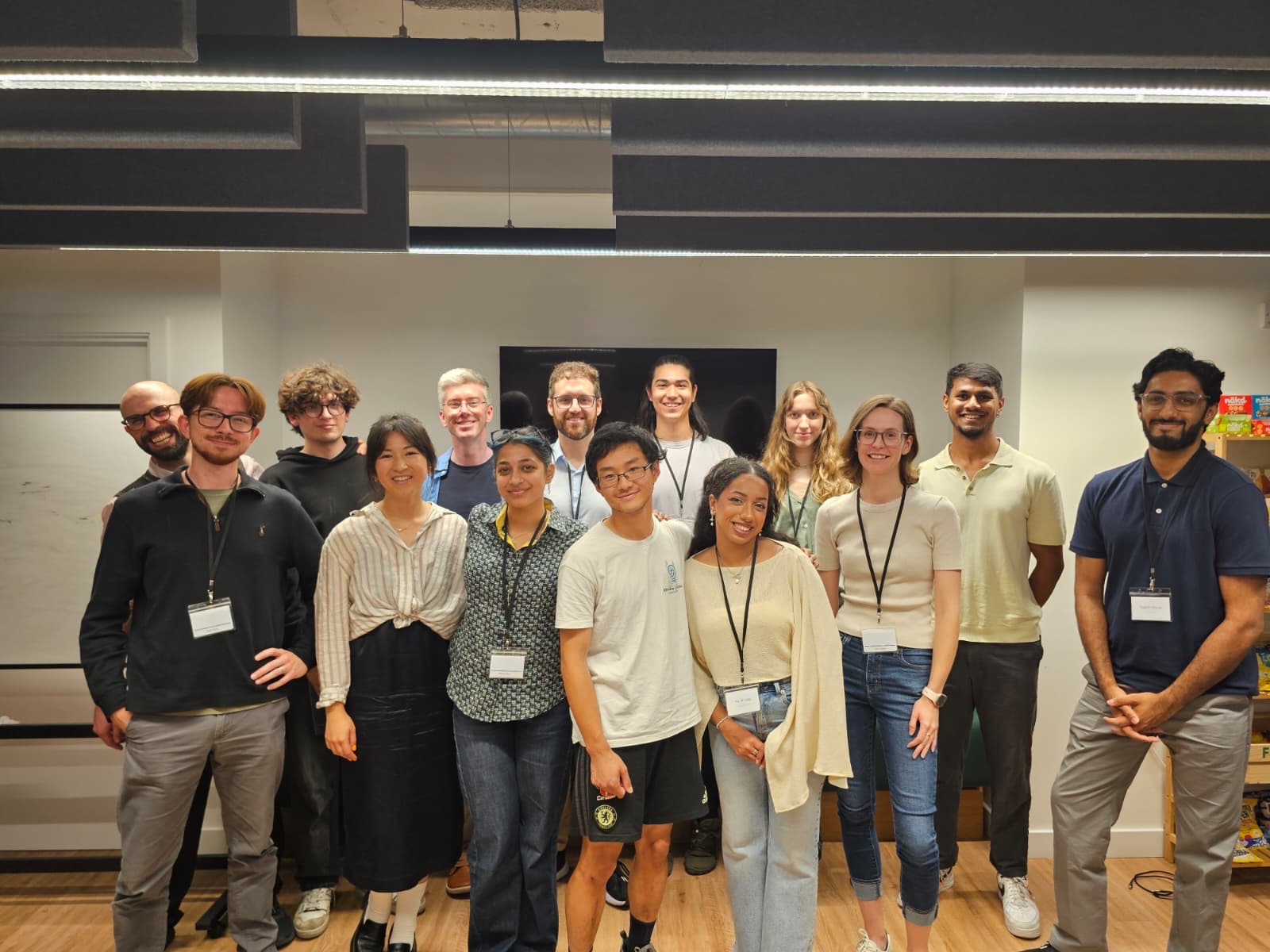
Participants built practical tools, developed new programmes, and made connections across the field. Here’s a selection of their work.
Natasha Misra
Daniel Trevor Walsh
Zahra Farzanekhoo
Zuza Topolska
In their words
It hugely changed my perception of self. I immediately feel much, much more qualified and better placed to do cool things. My self confidence has skyrocketed.
Built a US government past-casting workshop and BlueDot course
We design and run Gen Stream, and support participants beyond the week.
Co-founder & Facilitator
Design, facilitation, and helping participants turn ideas into finished work.
LinkedIn
Co-founder & Facilitator
Curriculum, mentoring, and the next steps participants take after the programme.
LinkedIn
Operations Lead
Programme operations, participant support, and the details that make the week run smoothly.
LinkedInExperienced perspectives on strategy, operations, and building the programme.
Get involved
Join a future cohort, mentor a participant with a real project, or help us run Gen Stream. Pick the route that fits you.
Questions
Can’t find what you’re looking for? We reply to every message.
Email the teamStudents, AIS group organisers, and career transitioners in the UK and EU. Exceptional candidates from elsewhere are welcome. Two groups in particular: people with context and motivation but no employer-legible evidence yet, and people with strong skills from adjacent fields who need field context and a credible signal of fit.
No. Travel, accommodation and food are covered.
No. Gen Stream is for operators, programme people, talent, comms, events and fieldbuilding. The non-research work AI safety orgs run on.
A shipped project, with a demo video and one-page summary already in front of at least one relevant person, a booked 1:1, a 30-day plan, an expanded network, and a concrete answer to "what does a generalist actually do, and which kind am I?"
Neither. Most of the week is building, feedback, and packaging your work. No rankings, no judging panels. A small cohort, one project each, one demo each. It can also serve as preparation for longer programmes, rather than being a replacement for them.
Before the week: an opening call, a short reading list, and choosing your project. You arrive in London the day before. Monday orients the cohort and locks scopes. Tuesday is about getting an ugly first version to exist. Wednesday is red team day, with midpoint critiques in trios and permission to pivot. Thursday finishes the build and moves into packaging: video, outreach, handover. Friday you send the emails, finalise your 30-day plan, and demo in front of LISA.
Real problems sent in by AI safety organisations, or picked from a bank of open problems in the ecosystem. Everyone gets a project. Scopes are cut down until they can be finished in a week and used afterwards.